
Low Voltage Landscape Lighting in Minnetonka & Lake Minnetonka
Make the entrance, walking routes, trees, and outdoor gathering areas easier to enjoy after dark. Compare lighting effects, glare, controls, and fixtures suited to the installation location and expected conditions.
Start With How You Use the Space
Lighting design begins with the places you want to use and the features you want to see after dark. Fixture selection, layout, controls and installation conditions determine the scope. Ask for a proposal that identifies the equipment and work included.
Low-voltage lighting uses a transformer matched to the fixtures and layout. Low voltage does not make live wiring safe to touch. Disconnect power before maintenance, follow the manufacturer instructions and use a qualified professional for electrical work.
Lighting design starts with what you want to see after dark. Compare the effect on a tree, wall, path, or step from the house and outdoor seating. Fixture placement, beam spread, intensity, glare, and controls should suit each location and the selected system.
Select fixtures, wiring, connectors and a transformer appropriate for the proposed system and conditions. Ask for product information and care guidance. Any capacity reserved for later additions should be determined as part of the system design.
Lighting Options for Paths, Plants and Structures
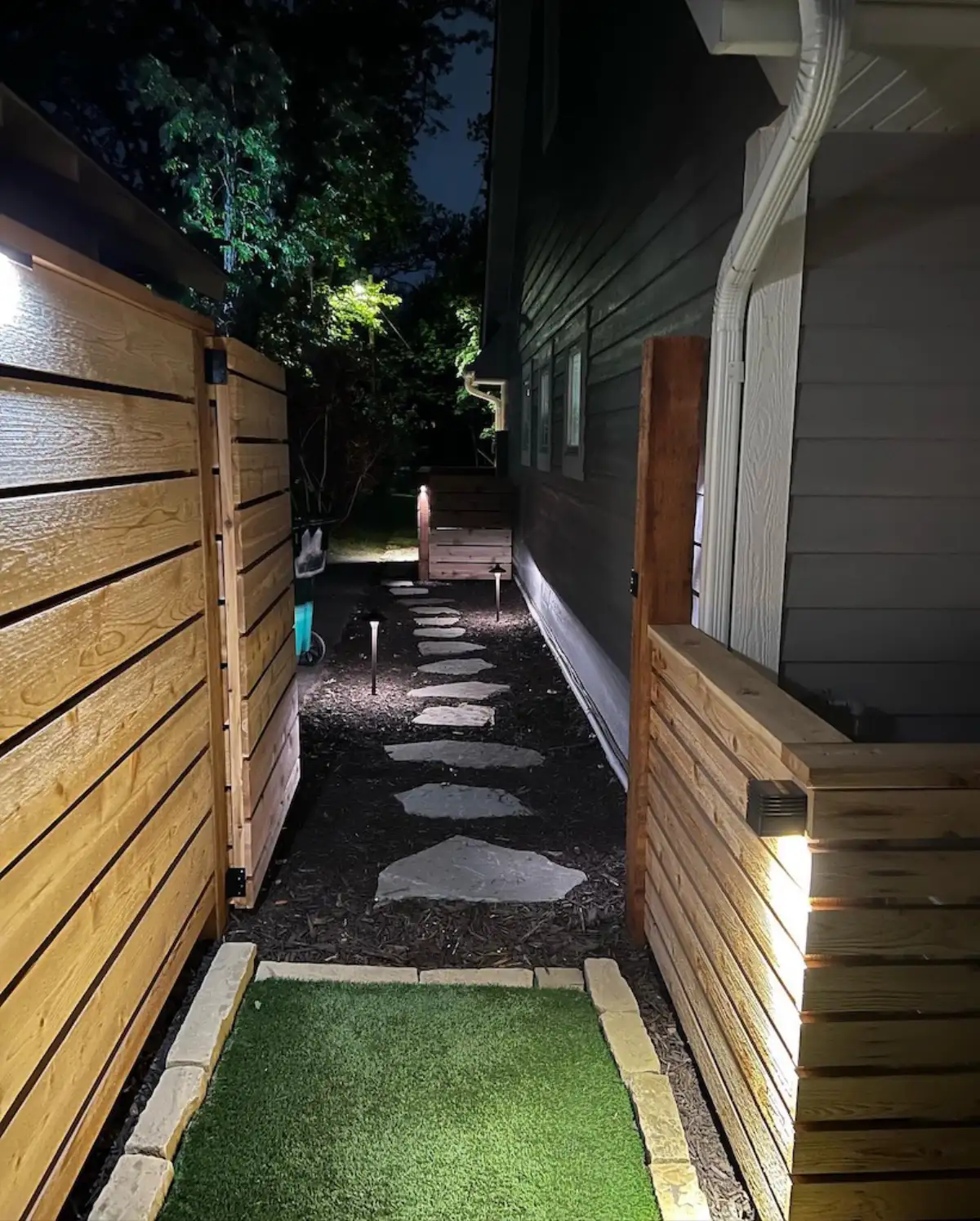
Start with the routes and features that matter to you. Path, accent, step, wall, deck, and water-feature lighting have different placement and equipment needs; the appropriate combination depends on the space.
Path & Walkway Lights
Path fixtures can help define a route without overwhelming the surroundings. Placement and output should be evaluated for the actual path, nearby planting and views from the house.
Uplighting & Tree Lighting
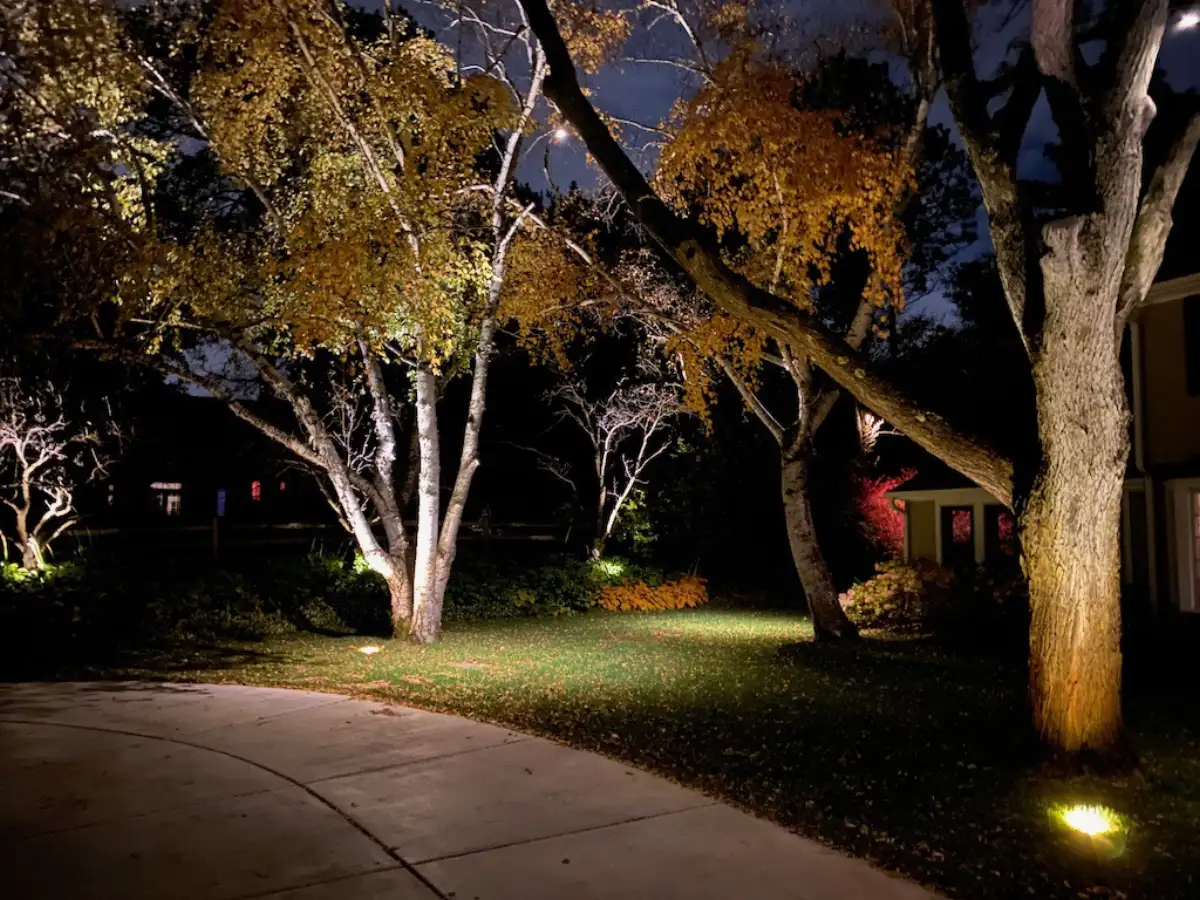
Uplighting can emphasize a tree, column or textured wall. Aim, output and fixture placement should respond to the particular feature while considering glare and neighboring areas.
Step & Riser Lights
Step fixtures can help define risers and changes in level after dark. Discuss locations while planning new steps, or assess the options for an existing stair. The fixture and installation method need to suit the structure and expected exposure.
Wall Wash & Graze Lighting
Light directed across a wall can emphasize the texture of stone or other surfaces. Compare the effect of fixture position, beam spread, and intensity on the actual wall, including the view from nearby seating and windows.
Deck & Railing Lights
Deck lighting can illuminate walking surfaces, stairs, and gathering areas from suitable railing, post, or structural locations. Coordinate it with nearby patio and path lighting, and compare compatible controls for the areas you want to operate together or separately.
Underwater & Water Feature Lighting
Water-feature lighting needs products and installation specifically suitable for the location and intended exposure. Confirm product ratings, electrical responsibilities, access for care, and the applicable requirements before selecting or installing fixtures.
Low Voltage Lighting in a Four-Season Climate
An outdoor lighting plan should account for weather exposure, snow removal, moisture, access for care, and the actual product ratings. Follow the selected system’s requirements for fixtures, wiring, connections, controls, and installation.
Wiring routes, connections, power supply and controls must follow the applicable requirements and equipment instructions. Have qualified professionals establish the installation details. Disconnect power before maintenance and keep the relevant system documentation.
Identify snow-storage areas and the routes used by snow-removal equipment before choosing fixture positions. Product ratings and installation details should suit the exposure, including the selected equipment’s drainage requirements. Leave practical access for inspection, cleaning, and replacement.
Low Voltage Lighting FAQ
Ask the team to define fixture quantities, selected products, wiring routes and controls in the estimate. Identify optional work and any assumptions that still need a site review.
Choose fixtures, wiring, connections, and controls rated for the location and expected conditions, following the selected system’s instructions. Keep fixtures visible and clear of damage from snow removal. Check the timer settings, light output, and connections as part of routine care; performance depends on the actual products, installation, exposure, and maintenance.
A low-voltage landscape system uses a transformer to reduce the supply voltage for compatible fixtures. Line-voltage lighting uses fixtures designed for the supply voltage instead. The transformer, fixtures, wiring and controls must suit the selected system. Have a qualified professional determine the appropriate arrangement for the location.
Kichler’s overview of landscape lighting transformers explains how the supply voltage is reduced.
Hardscape Features That Benefit From Built-In Lighting
Patios
Integrate step lights and perimeter lighting during patio construction for a seamless, cohesive design.
Retaining Walls
Wall wash and cap lights reveal the texture and craftsmanship of your retaining walls after dark.
Pergolas
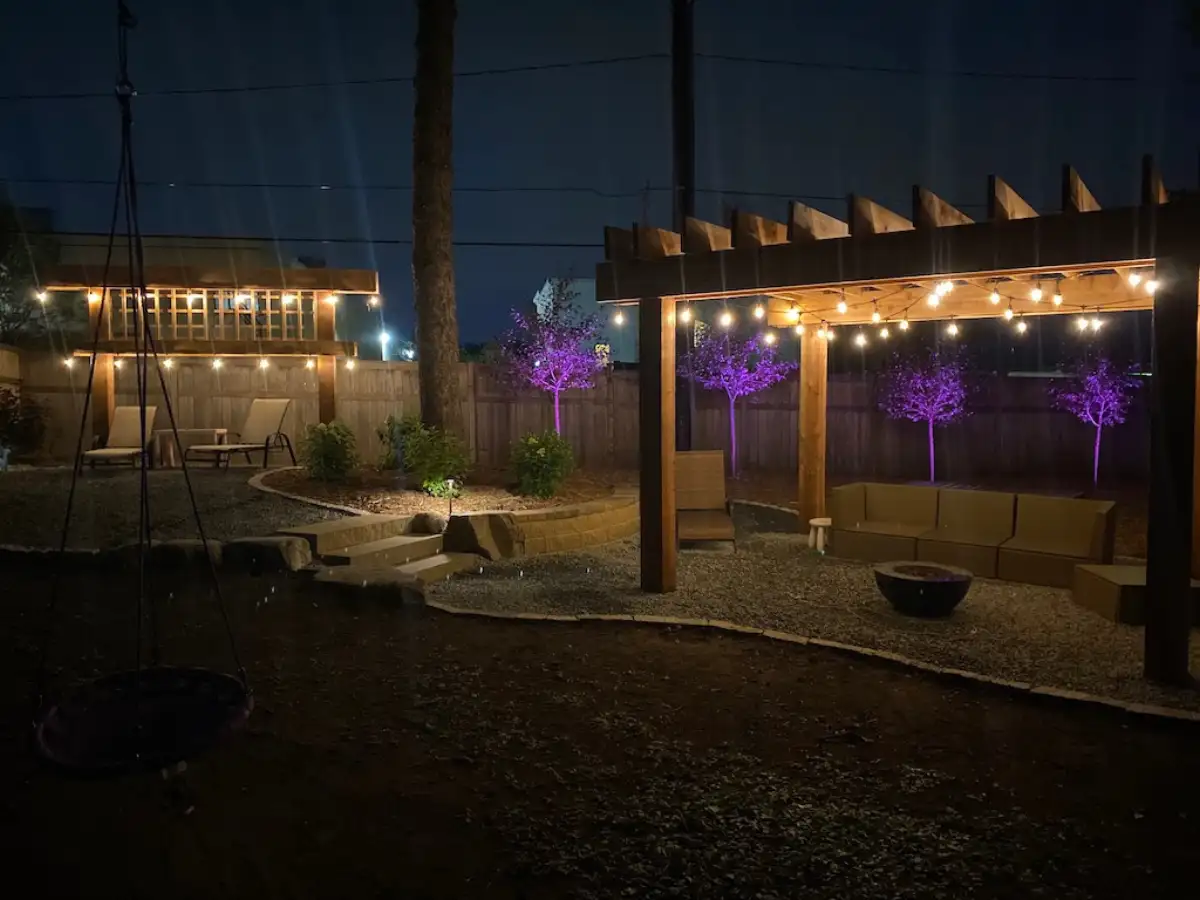
String lights, downlights, and beam-mounted fixtures create inviting covered outdoor rooms.
Plan Low Voltage Lighting Before the Hardscape Is Closed
Schedule a consultation to discuss your entrance, patio, paths, and landscape features. Bring existing plans or photos and describe how you use the property after dark so fixture choices and installation routes can be considered together.