
Low Voltage Landscape Lighting | Minnetonka & Minneapolis
Outdoor lighting for gathering areas, everyday paths, and landscape features after dark. Consider fixture placement, glare, controls, and the surrounding space as part of your outdoor-living plan.
See Your Property in a Completely New Way
Lighting can make paths, planting and gathering areas easier to enjoy after dark. Compare the output, color, controls and care requirements of the actual fixtures proposed. Operating cost and service life depend on the equipment, use and conditions.
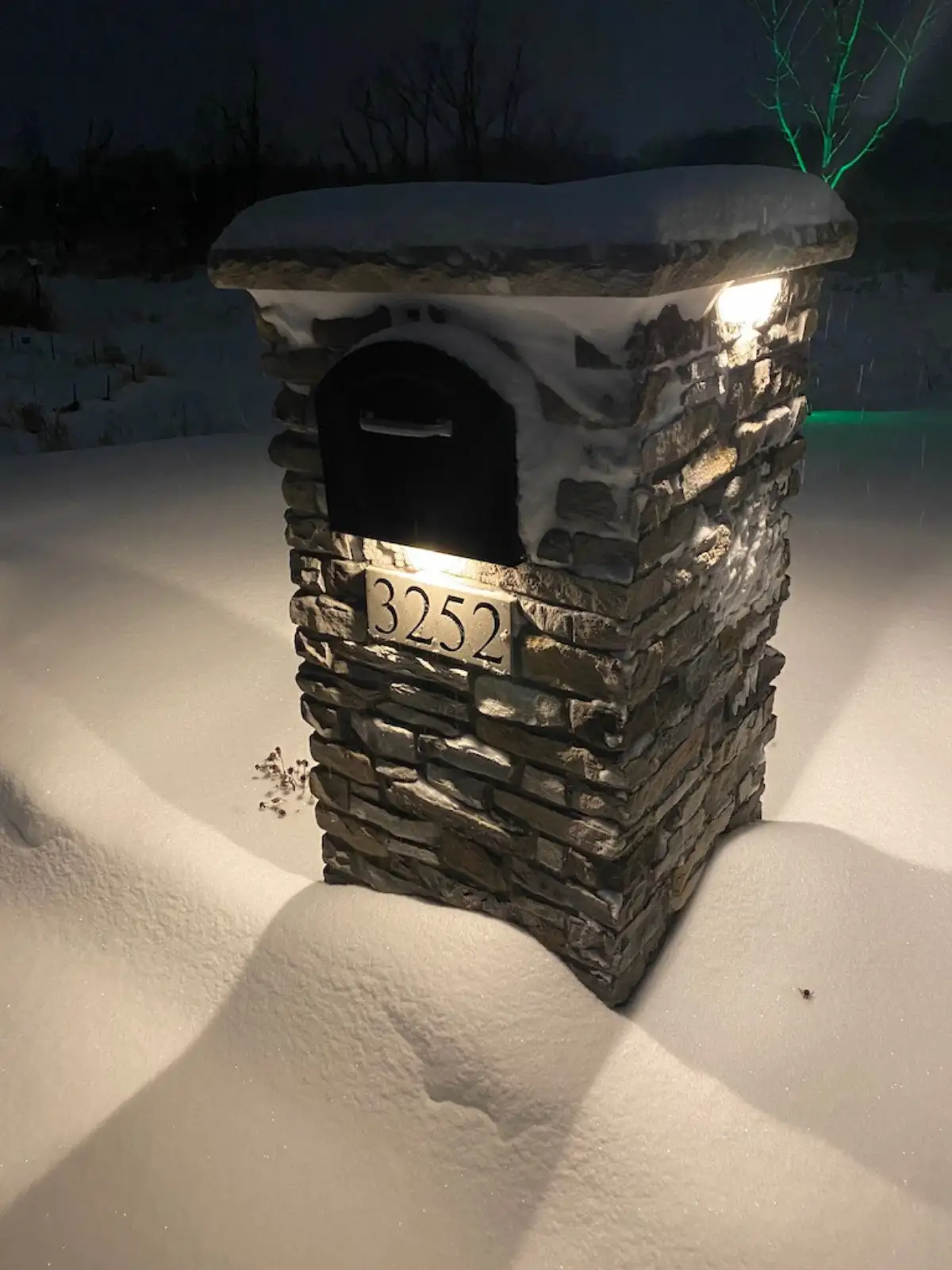
Shorter winter days make the route from the driveway to the front door especially relevant to a lighting plan. Summer gatherings create a different need: light where people sit, cook, and move between the house and patio. Consider both everyday routines and occasional entertaining when choosing the areas to illuminate.
Plan lighting alongside patios, steps, and retaining walls when those features are under construction. Reviewing fixture positions and wiring access before finished surfaces go in can help coordinate the work. Existing landscapes can also be assessed for suitable installation routes and the effect on planting and paving.
Four Useful Lighting Effects
Start with the places you use after dark, then combine the effects that serve those spaces. Every area does not need the same brightness or treatment.
Path & Step Lighting
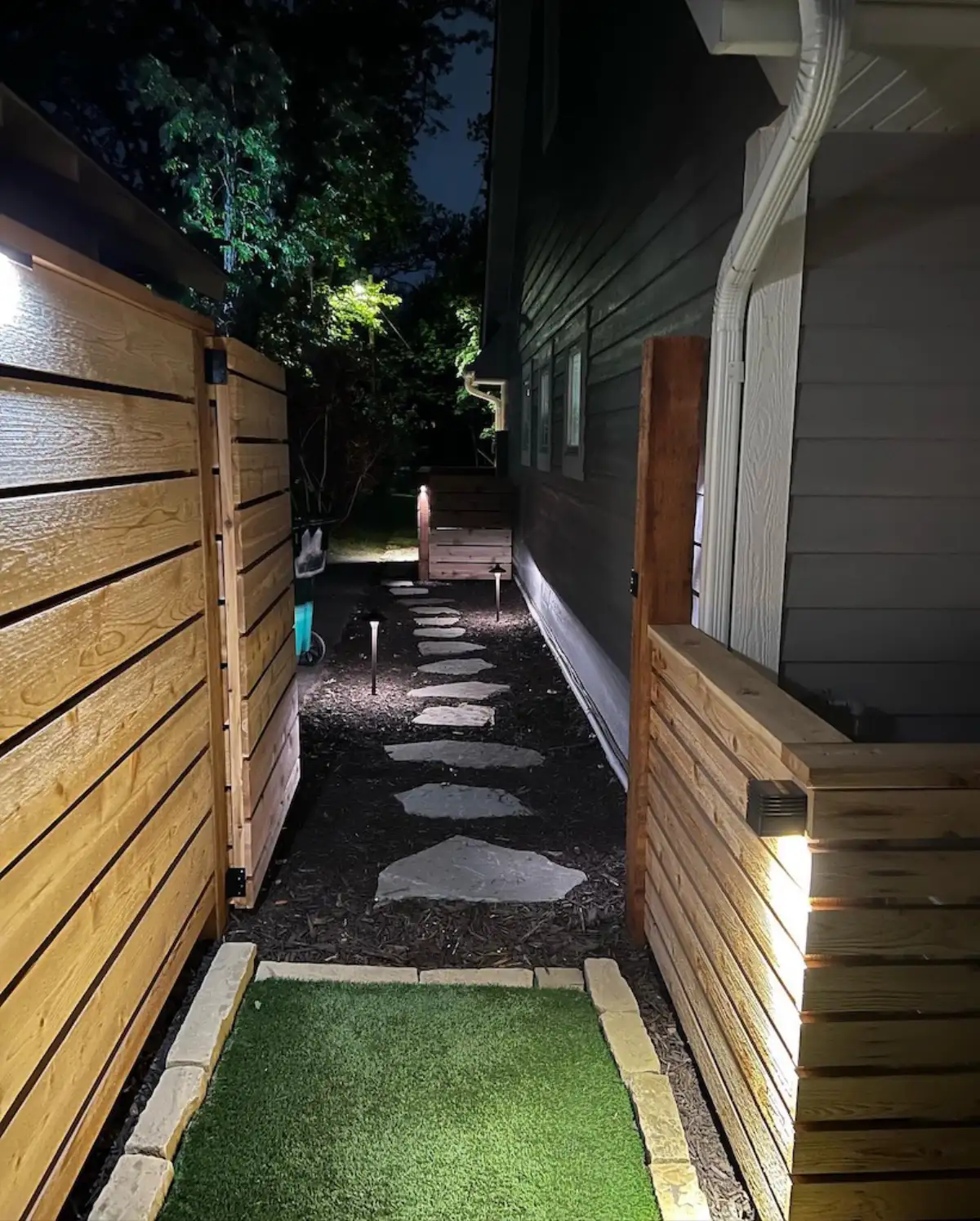
Path and step fixtures help define walking routes and changes in level. Consider the view approaching each step, the width of the path, nearby planting, and glare toward seating or windows. Fixture spacing and output should suit the actual layout.
Uplighting & Accent
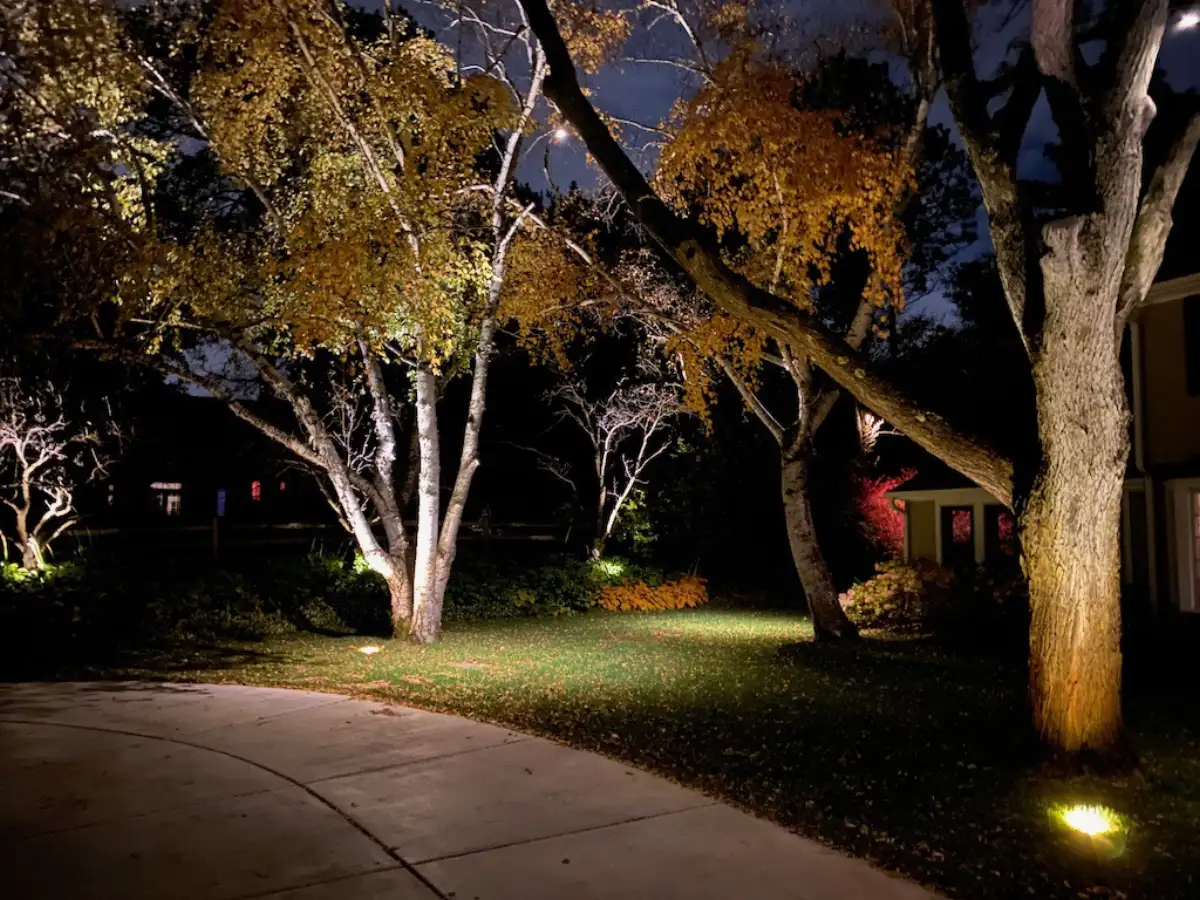
Accent lighting draws attention to a tree, textured wall, or architectural feature. Compare the beam spread, light color, and direction on the feature itself. A few selected focal points can give the evening view more definition without lighting the entire yard.
Area & Task Lighting
Area lighting serves gathering spaces; task lighting focuses on places such as a cooking or serving surface. Discuss the activity, mounting locations, glare, and the brightness you need. Dimming and separate controls are options to compare where compatible with the selected equipment.
Entrances & Approaches
Lighting at doors, garage approaches, and connecting paths can make the arrival route easier to see. Consider how fixtures face the house, street, and neighboring windows. Timers or motion controls may be useful where compatible with the proposed system.
Plan for Evening Use in Every Season
Think about which entrances and paths you use during darker winter evenings, as well as the patio and garden views you enjoy in summer. The plan can prioritize those everyday routes and add selected landscape accents where they improve the view from indoors or outdoor seating.
Trees, walls, and planting take on a different appearance after dark. Light direction and contrast matter as much as brightness. Review the proposed focal points from several viewpoints so a fixture that highlights a feature from the yard does not create glare from the house.
Winter planning also includes snow-storage areas, snow-removal routes, and access to fixtures for care. Keep those conditions in the layout discussion. Lighting can help show path edges and steps, while snow and ice still require their own maintenance.
Energy Efficiency
Operating cost depends on fixture wattage, hours of use and your electricity rate. Compare the selected system load and controls when planning the installation; replacement and maintenance needs vary by product.
Choosing the Right Low Voltage Lighting System
Not all low voltage landscape lighting systems are equal. Understanding the technical differences helps you make a better investment decision.
Transformer Sizing and Placement
Select a transformer compatible with the fixtures, total load and circuit layout. Its placement, supply connection, mounting and ventilation must follow manufacturer instructions and applicable electrical requirements. Discuss control zones and access for maintenance before installation.
Wire Gauge and Voltage Drop
Wire length, conductor size, connected load and circuit layout affect voltage at the fixtures. The lighting design should account for those factors and follow the selected transformer and fixture instructions. A fixed voltage-loss percentage does not apply to every installation.
Fixture Quality and Weather Resistance
Outdoor fixtures need to suit the expected moisture, temperature and exposure. Compare construction, weather ratings, connection requirements, serviceability and written warranty terms for the actual products in the proposal.
Smart Controls and Automation
Choose controls around the way you use the property. A timer can handle a regular schedule, while compatible zones can separate an entrance route from a patio or accent area. App control, dimming, and motion activation depend on the selected equipment. Ask the proposal to identify the controls, compatibility, and operating guidance included.
Where Landscape Lighting Adds the Most Value
Patio Lighting Zones
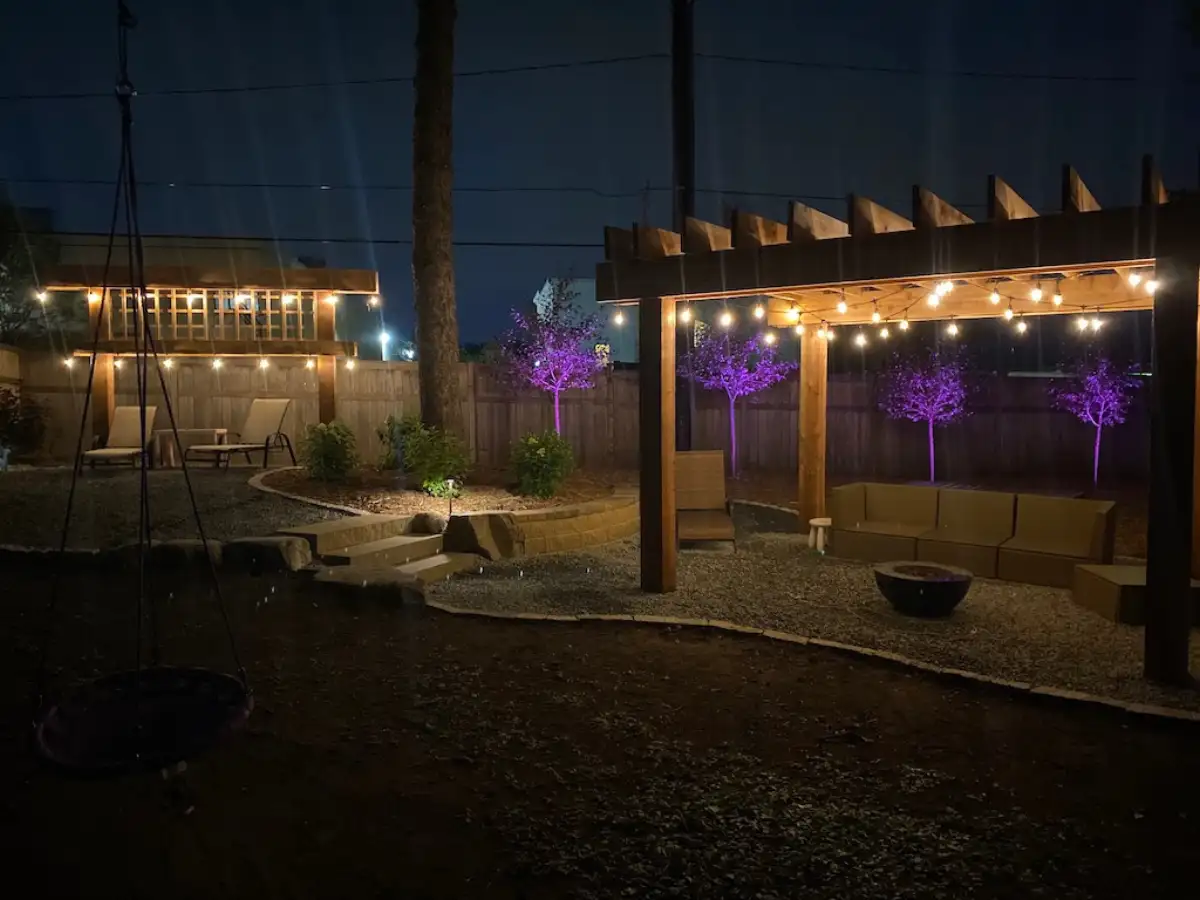
Discuss fixture positions and wiring routes while planning the patio so the lighting and paving work can be coordinated.
Step and Stair Lighting
Lighting near steps can help define risers and edges after dark. Coordinate placement with the actual stair and wall design.
Fire Feature Accent Lighting
Ambient LED lighting paired with firelight creates layered illumination that is both functional and atmospheric.
Outdoor Design Perspective
Belgard featured Charlie Kraemer in its March 2022 discussion of outdoor design and identified him as an Advisory Council member. Read the Belgard interview.
Landscape Lighting FAQ
Lighting scope and pricing depend on the proposed fixtures, controls, power arrangements and installation conditions. Ask for a written estimate that identifies the products and work included.
Fixture life depends on the product, operating hours, exposure and maintenance. Review the manufacturer ratings, replacement options and warranty terms for the selected fixtures. No housing or LED should be described as lasting indefinitely.
Lighting may be added to an existing outdoor space after the installation routes and conditions are assessed. If other construction is planned, discuss lighting at the same time so the team can coordinate access and connections.
Bring the Property to Life After Dark
Schedule a consultation to discuss your entrances, paths, gathering spaces, and the landscape features you want to see after dark. Share existing photos and plans so the next steps can be tailored to your property.