
Outdoor Fireplaces, Fire Tables, and Built-In Fire Features
Permanent gas and wood-burning fire elements planned with clearances, utilities, materials, code requirements, and the surrounding outdoor room in mind.
The Fire Feature Is Part Appliance, Part Structure
A fire-feature proposal should identify the selected equipment, surround, supporting surface and any utility work. Fuel arrangement, access and adjoining construction can change the scope. Request a current estimate for the actual design instead of relying on a general local price range.
Fireplaces, gas fire tables, masonry fire pits, burner systems, caps, veneers, and controls all need to be considered alongside fuel supply, code requirements, service access, and safe clearances. When the flame is part of a larger fire pit space, chair spacing, patio size, seat walls, and traffic flow should be resolved at the same time so the fire system and seating zone work together.
Consider the fire feature as part of the permanent landscape. Discuss its relationship to the patio, surrounding materials, utilities, and everyday movement through the space. Clarify who will handle each part of the proposed installation and any required specialist work.
Convenience, Flame Character, and Local Rules Drive Fuel Choice
Compare fuel options against the selected equipment, available utilities, how you want to use the feature, and its care requirements. Discuss any connection work, fuel storage, and service access. Check the current restrictions for your location before use; a fuel choice is not permission to operate during a restriction.
Wood-burning fireplaces and pits create more sound, scent, and radiant character. They also require wood storage, ash cleanup, smoke awareness, and attention to local rules. We discuss how often the feature will be used, who will operate it, and whether the priority is low-maintenance weeknight use or a traditional wood-fire experience.
The Finish Has to Match Heat, Weather, and the Patio
Outdoor fire features need materials that tolerate heat, moisture, freeze-thaw cycles, and repeated cleaning. Caps, veneers, burner pans, fire brick, metal inserts, and surrounding pavers are chosen as a system. A stone that looks good on a wall may not be the right cap beside heat or food service.
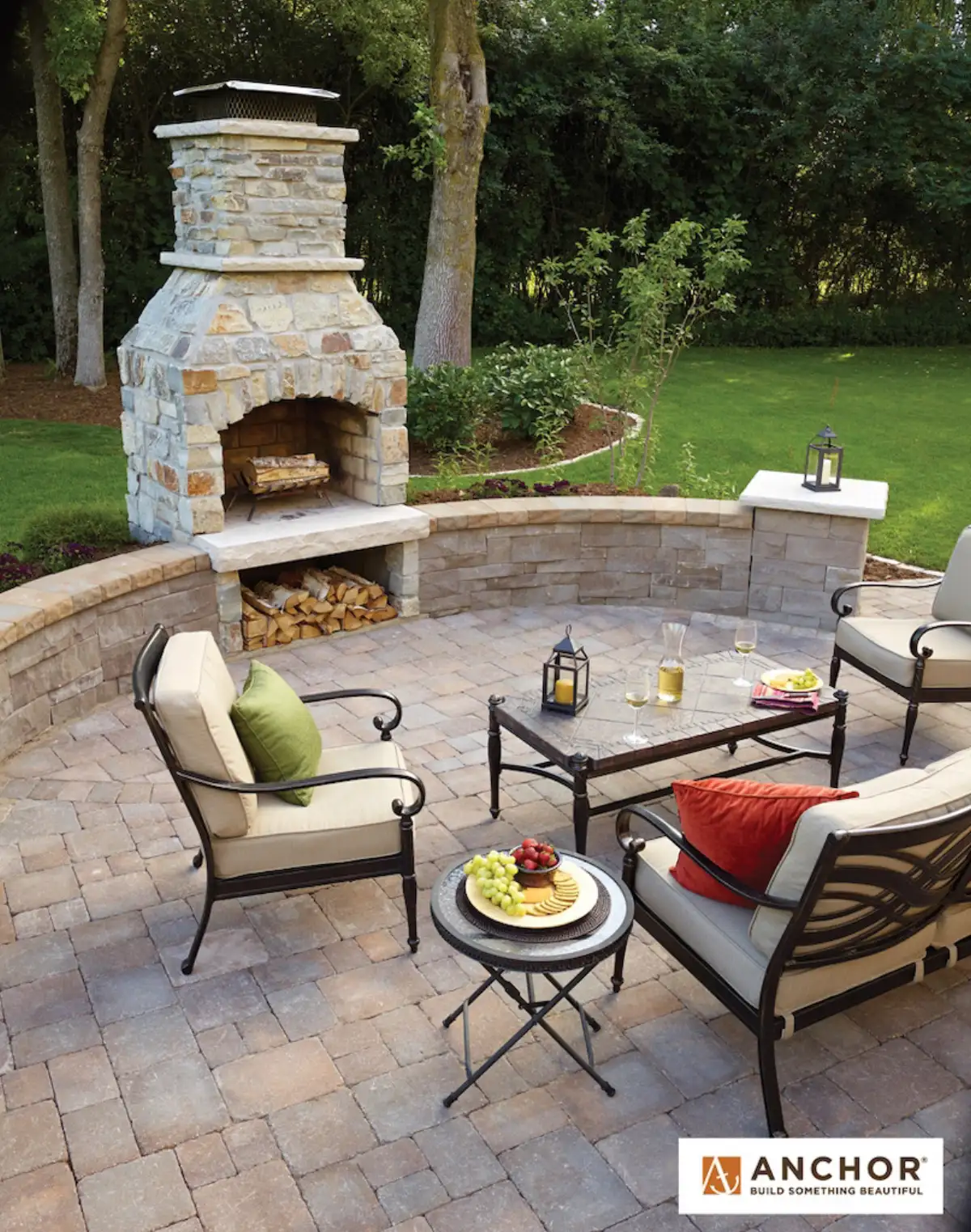
We coordinate the fire feature with nearby patios, walls, pergolas, steps, and planting beds. That keeps the scale right: a full fireplace can anchor a large terrace, while a low linear fire table may be better for a modern lounge or dining edge.
Choose the Flame System Before Finalizing the Room
Each option changes utilities, clearances, maintenance, cost, and the way people gather around it.
Outdoor Fireplace Structures
A vertical masonry fireplace creates a strong focal point and directs heat toward a defined seating area. It is best for larger patios where the structure will not crowd circulation or block key views.
Gas Fire Tables
Linear or rectangular fire tables fit contemporary lounge layouts and can serve as a low gathering surface. They need careful burner sizing, gas supply, wind consideration, and service access.
Integrated Fire Pit Inserts
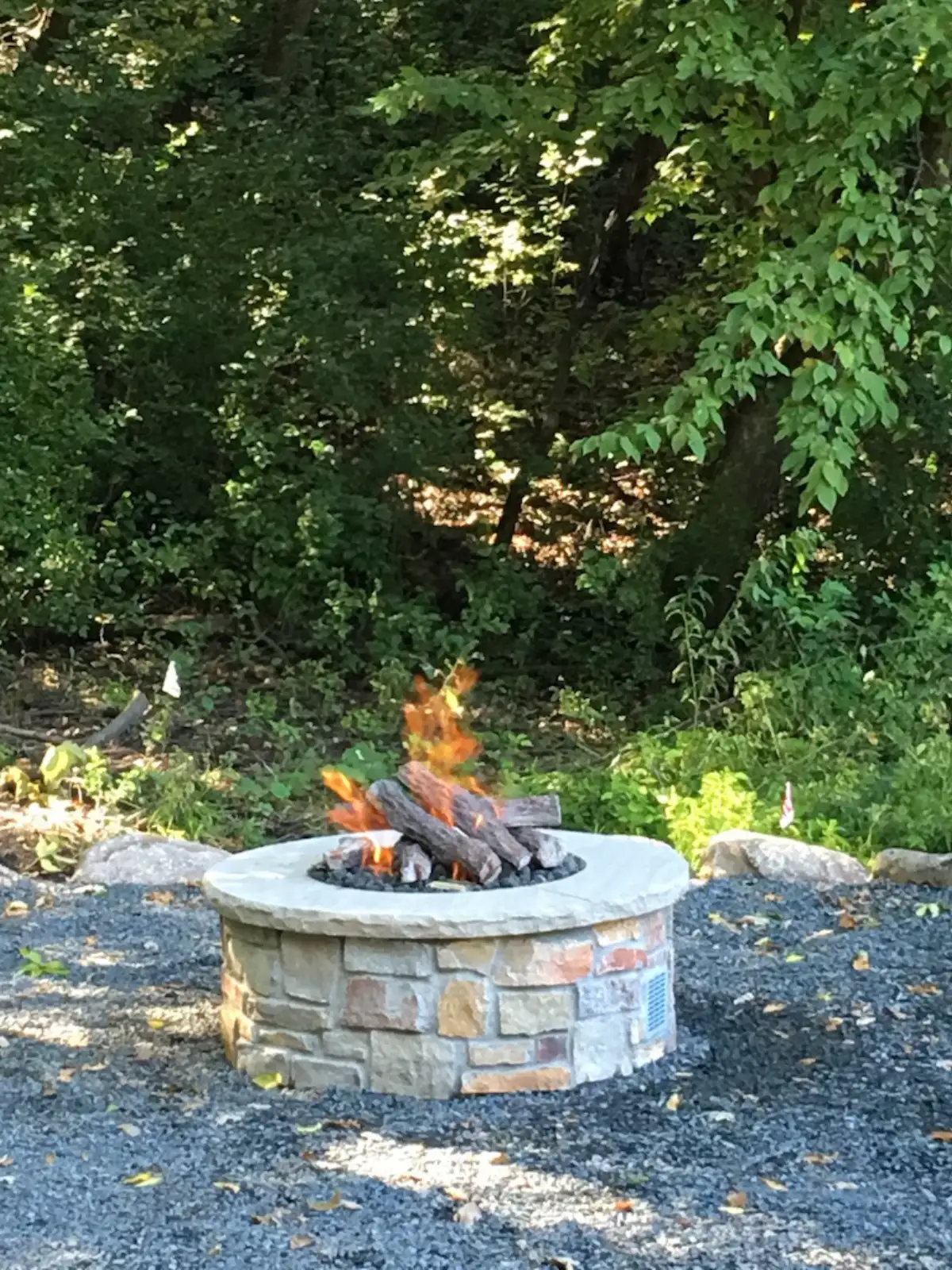
Round, square, and rectangular fire pits work well when the patio is designed around them. Gas versions prioritize convenience; wood versions prioritize traditional campfire atmosphere.
What We Resolve Before the First Stone Is Set
The best fire features are easy to light, comfortable to gather around, and placed with the home, patio, wind, and utilities in mind.
Gas Line Distance and Capacity
Review the selected gas equipment, proposed location, and available utilities with the responsible qualified professional. Clarify the connection work, access, approvals, and coordination needed before the adjoining hardscape is built.
Clearance From Structures
Fire features need appropriate distance from the house, deck, pergola posts, roof lines, fences, and plantings. Clearances vary by fuel type and product. We review placement early so the finished patio does not need a last-minute layout change.
Ignition and Shutoff Access
A fire feature should be easy to operate and easy to shut down. Valve placement, access panels, burner service, and control location matter, especially when the feature is built into masonry or a seat wall.
Wind and Smoke Behavior
Wind exposure changes flame comfort and smoke direction. On lake-area properties, a spot that looks perfect in a still afternoon may be uncomfortable on a breezy evening. We consider prevailing wind, house doors, and neighboring outdoor spaces before final placement.
Fire Feature Choices We Lock In Before Installation
A permanent fire element has equipment details that should be selected before patio construction starts.
Burner Shape and BTU Range
Compare the selected equipment’s flame arrangement, output, fuel requirements, and operating instructions with the size and use of the surrounding space. Have suitability and connections reviewed by the responsible qualified professional before finalizing the feature.
Media, Pan, and Drainage
Lava rock, glass media, log sets, burner pans, weep openings, and covers all affect performance and maintenance. Outdoor fire features are exposed to rain and snow, so water management inside the fire box is part of the specification.
Valve, Key, and Service Access
Review shutoff controls and service access using the selected equipment’s instructions and the applicable installation requirements. Discuss how the surround and nearby furniture will allow access for operation and maintenance.
Winter Use and Off-Season Care
Review the selected equipment’s instructions for cold-weather operation, storage, covers, cleaning, and seasonal care. Ask what maintenance is needed and which tasks require professional service.
Hardscape and Wall Project Planning
Belgard featured Charlie Kraemer in its March 2022 discussion of outdoor design and identified him as an Advisory Council member. Read the Belgard interview.
Built-In Fire Feature FAQ
Compare the selected gas and wood-burning options by their operation, fuel supply, cleanup, space, and care requirements. Check current restrictions for your location before using either type. Bring those priorities to the design discussion rather than choosing from appearance alone.
Sometimes. We need to review patio base condition, available space, clearances, fuel routing, and whether pavers must be lifted for gas, electrical, or drainage work. If the patio is too small, the better project may be a patio expansion with the fire feature built into the new layout.
Yes. Fireplaces are heavier, taller, more visually dominant, and more sensitive to placement. They affect views, wind, seating direction, masonry cost, and sometimes permit review. We size and locate them before the patio shape is finalized.
Plan a Built-In Fire Feature That Fits the Patio
Schedule a consultation to compare fireplaces, fire tables, and built-in fire pits for your Lake Minnetonka area patio.