
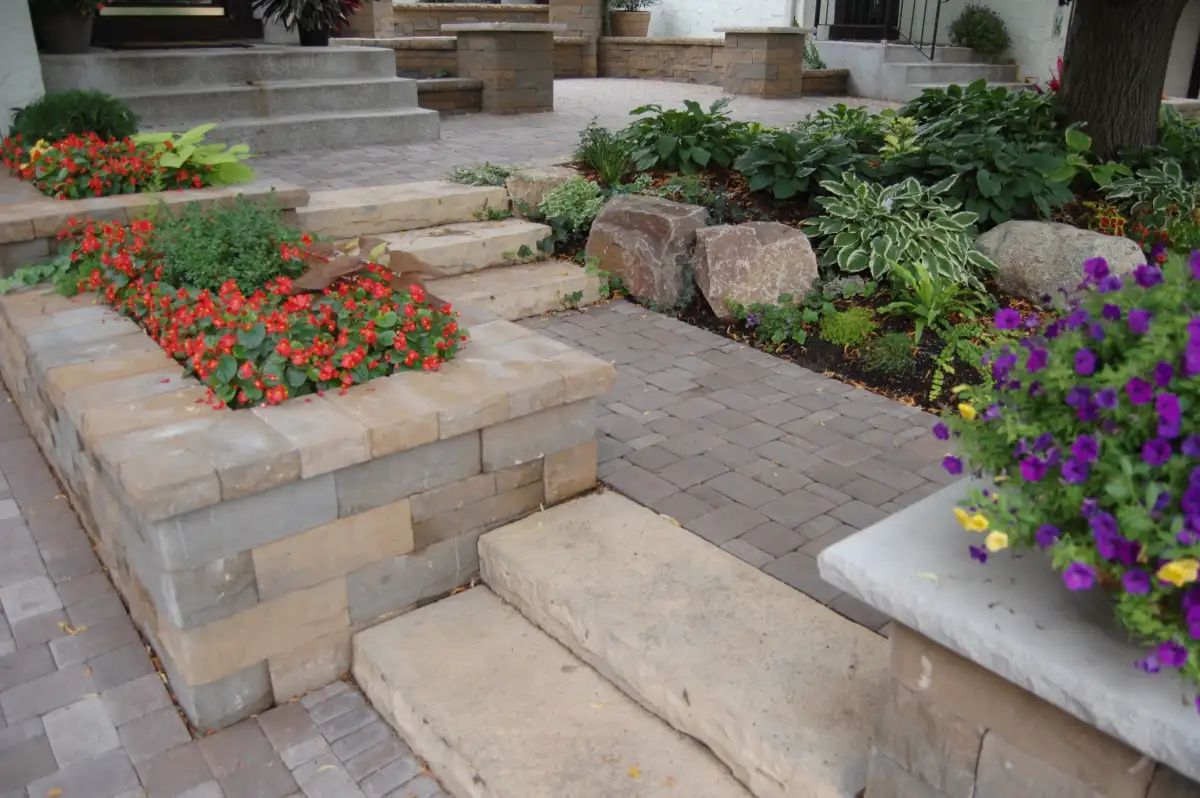
Paver Walkway Installation in Minnetonka & Lake Minnetonka
Create a clear, welcoming route from your driveway to the door or connect a patio and garden. Compare the paving, width, transitions, supporting construction, and care for the way you use your home.
The Walkway Sets the Tone for Your Entire Property
Walkway pricing depends on the proposed route, materials, site preparation and connections to existing surfaces. Ask for an estimate that includes the actual installation and surrounding restoration for your property.
A front walkway connects the approach to your home with the door itself. Consider how its outline, paving pattern, borders and nearby planting relate to the entrance. The route should also accommodate the way your household and visitors actually arrive, including doors, gates and changes in level.
Walkways can connect the driveway, front entry, patio, garden and other outdoor spaces. Think about the conditions along each route: shade, water, seasonal maintenance and the people who will use it. Compare the selected material and supporting construction with those conditions.
Choose the route before settling on the pattern. A curved path through planting creates a different approach from a direct connection between two doors. Try the layout against the existing yard, the entrances and the places where people need to pass or turn.
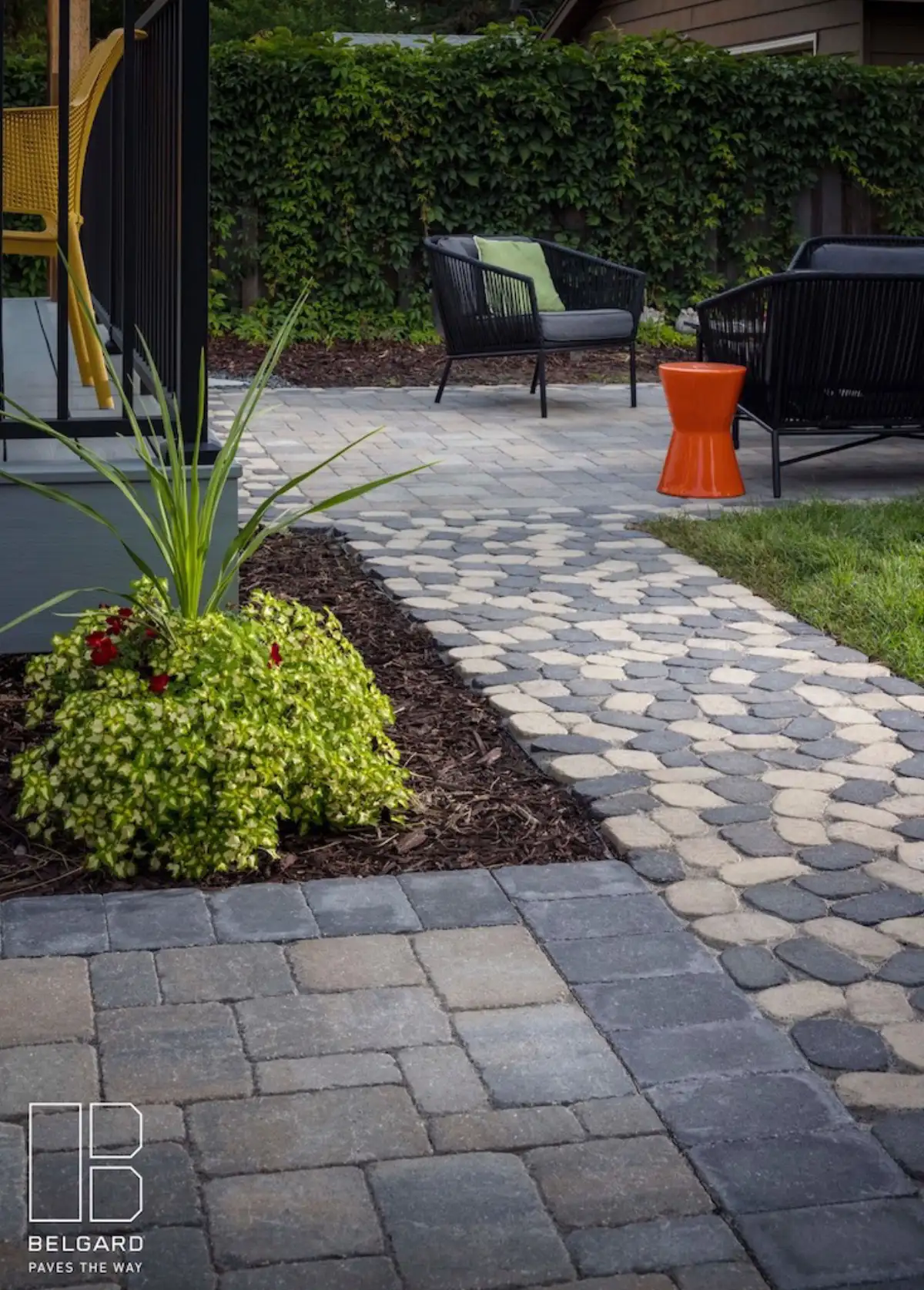
Paving pattern inspiration from Belgard.
Types of Walkways We Build
Each walkway type has distinct design considerations. We tailor width, material, and routing to the specific application.
Front Entry Walkways
Plan the approach around the actual door, steps, landing and arrival route. Establish the width for everyday use and any applicable accessibility needs before choosing a paving pattern. A contrasting border or adjacent planting can help relate the new path to the entrance.
Garden & Side Yard Paths
A garden or side-yard path can connect planting areas, gates and outdoor seating. Compare a continuous paved route with stepping stones where appropriate for the intended use. Leave room for the people, tools and maintenance access the path needs to accommodate.
Patio-to-Feature Connections
Connect a patio with a fire feature, outdoor kitchen, garden or separate seating area. Position the route around furniture in use and the entrances to each space. Matching paving can create continuity, while a different border or material can mark a transition.
Lakefront Access Paths
For a proposed route toward the shoreline, review the actual grade, existing vegetation, ground conditions and access. Steps, landings or a different alignment may be worth discussing. Establish which authorities and property restrictions apply to the address and proposed work before finalizing the design.
Paver Walkway FAQ
Plan the walkway around everyday access, people passing, doors and gates, landings, and household mobility needs. The approach should connect comfortably to the actual entrance and adjoining surfaces. Establish the dimensions and any applicable accessibility requirements for your property before choosing the paving pattern.
Pricing requires a site-specific estimate. Compare the complete proposed scope, including removal, preparation, paving, edges and any connected steps or drainage work. Identify options and exclusions before comparing totals.
No walkway is guaranteed against movement. The proposed assembly, drainage and site conditions need appropriate assessment and installation. Have the design established for the actual property and selected materials rather than applying one base-depth recipe to every location.
Services That Pair With Walkways
Front Entrance Renovation
Combine your walkway with a complete front entry redesign including steps, plantings, and lighting.
Patios
Matching paver walkways seamlessly connect your patio to other outdoor living areas.
Landscape Lighting
Consider path and step lighting for the parts of the route you use after dark.
Design a Walkway That Welcomes
Discuss your walkway route, existing surfaces, grade changes, and the way you use the property. Compare layout, selected materials, supporting construction, care, and connections to the house or garden.