
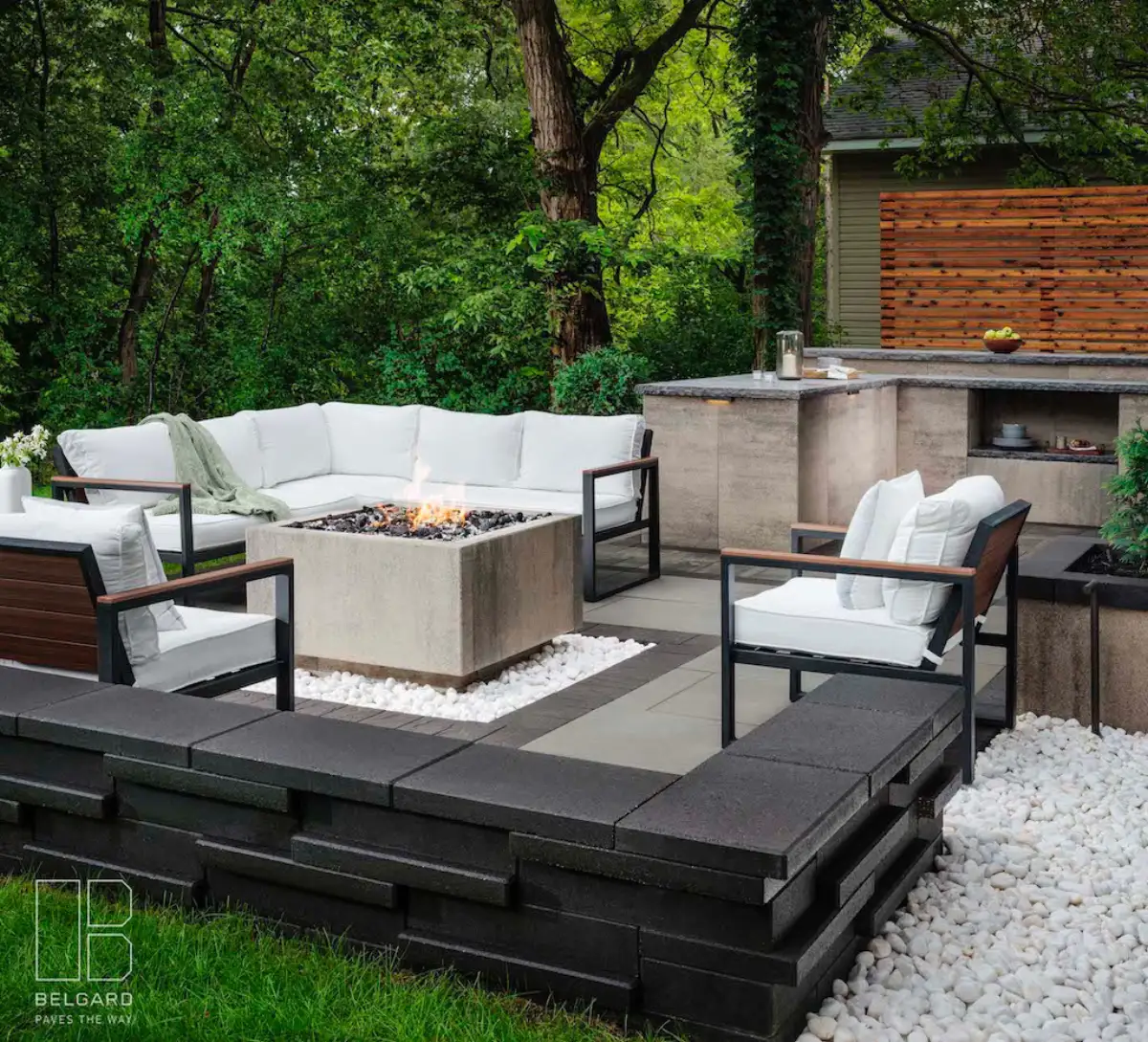
Get Straight Answers Before You Compare Patio Proposals
By Landscape Charlie | | 8 min read
A patio proposal should help you understand the entire finished project—not only the square footage and paver color. For an Excelsior property, that means bringing layout, grade, runoff, base preparation, access, restoration, and future outdoor features into the same conversation before work is booked.
The questions below address the topics homeowners most often use to compare patio options: cost, scope, construction, common problems, and ongoing care. For service details, visit Landscape Charlie's patio installation page. For local service context and related project paths, see landscaping in Excelsior, MN.
The Most Useful Price Question
Instead of asking only, “What does a patio cost per square foot?” ask, “What finished scope does this proposal include?” Size matters, but so do excavation, grade, access, drainage, material choices, edges, transitions, and restoration.
How Much Should a 12-by-12 or 20-by-20 Patio Cost?
Those common size questions are reasonable starting points, but dimensions alone cannot produce a dependable project price. A simple rectangle with open access and few transitions is a different construction problem from the same-size patio beside deck stairs, a sloped yard, a retaining wall, downspouts, or a narrow route from the street.
Material selection also changes more than the surface appearance. Paver format, pattern, borders, cuts, steps, wall caps, and transitions affect both material and installation scope. Demolition, soil haul-away, utility conflicts, lawn repair, and planting restoration may sit outside the patio outline while still belonging to the finished project.
Ask for a property-specific plan, then compare estimates line by line. Landscape Charlie's Minnesota patio cost guide explains the major cost drivers without suggesting that one generic number fits every site.
What Should the Written Patio Scope Include?
A clear proposal should make the invisible work visible. At minimum, ask how the document addresses:
- Finished dimensions, shape, elevations, and key transitions
- Paver, border, pattern, step, and wall material selections
- Excavation, subgrade review, aggregate base, bedding, and compaction
- Joint material and edge restraint
- Finished pitch, roof-water connections, and where runoff will move
- Access, staging, property protection, and material haul-away
- Final grading, lawn or planting restoration, and cleanup
- Allowances, exclusions, and the written change process
If a detail is absent, ask whether it is included, unnecessary for the site, or outside the price. That distinction is essential when two totals look different. It also gives you a better record of the project you are actually approving.
Why Do Base Preparation and Drainage Deserve Separate Questions?
The finished pavers are only the visible layer. Excavation, the prepared subgrade, compacted aggregate, bedding, joint material, and edge restraint work together as an assembly. The appropriate preparation depends on the property, which is why a universal base depth should not be promised before the site is evaluated.
Drainage needs the same property-wide view. Ask how the planned pitch relates to door thresholds, foundation clearances, roof water, low areas, lawn edges, and neighboring surfaces. In Excelsior, rain and snowmelt do not stop at the edge of the pavers; the discharge path needs to make sense beyond the patio footprint.
For a closer look at excavation, aggregate, pitch, edge restraint, and freeze-thaw planning, read the Excelsior paver patio drainage and base guide.
What Common Patio Problems Should Homeowners Watch For?
Visible symptoms may include water collecting in low spots, pavers that rock or settle, joints that open or lose material, edges that spread, or transitions that become uncomfortable. Organic debris and soil in joints can also create conditions where weeds take hold.
A symptom does not prove one cause. A low area may involve settlement, surrounding grade, or a changed runoff route. Movement near an edge may require a different review than movement near a downspout or stair. The useful response is to examine the affected area, the wider drainage pattern, the edge condition, and the original assembly before selecting a repair.
If the patio is connected to a wall or meaningful grade change, the retaining wall plan and patio elevations should be reviewed together rather than treated as unrelated surfaces.
Do Paver Patios Require Maintenance?
Yes, although the exact care depends on the selected paver and joint system. Routine attention commonly includes sweeping leaves and organic debris, cleaning spills with a method suited to the material, checking joints and exposed edges, and watching how water moves after heavy rain or snowmelt.
Addressing a small change early gives you a clearer chance to understand it before movement, washout, or an open joint becomes more extensive. Ask for product-specific care guidance at project completion, including suitable cleaners, winter practices, joint care, and whether sealing is appropriate for the chosen materials. Sealing should be discussed as an option with material-specific requirements, not assumed as a universal need.
Which Future Features Should Be Planned Before Installation?
A patio often becomes the base for a larger outdoor room. Even when later features are not part of the first phase, the plan should account for likely walking routes, furniture zones, deck stairs, planting beds, and clearances.
Ask whether future low-voltage lighting, a fire pit space, pergola footings, utilities, or a connecting walkway would benefit from sleeves, conduit, open edges, or reserved space now. Early coordination can protect the finished patio from avoidable disturbance during a later phase.
What Should You Bring to the First Site Conversation?
You do not need a finished design. A short, practical brief is more useful:
- How you expect to use the patio most often
- The number of people and furniture it should hold comfortably
- Photos of the yard, doorways, deck stairs, and access route
- Areas where you have noticed standing water or difficult grade changes
- Features you want now and those you may add later
- Any walls, walkways, plantings, lighting, or lawn areas to connect or preserve
Rough dimensions can help explain scale. The final size, elevations, and installation scope should follow the site review and the way the space needs to function.