
A backyard renovation can mean fresh planting around a patio you already enjoy, or rebuilding the yard with new gathering areas, walls, steps and lighting. Those are very different purchases. For your home around Lake Minnetonka, start with a broad cost benchmark, then narrow the budget around what stays, what changes and the work your yard needs underneath the finished features.
How much does a backyard renovation cost?
HomeGuide’s national cost guide places minor renovations at up to $10,000, mid-level renovations at $25,000–$50,000 and major renovations at $100,000–$150,000, with some major projects exceeding that range. These are broad categories, not fixed packages or a local quote. See HomeGuide’s backyard renovation cost guide.
Landscape Charlie’s price for your yard depends on a defined design and actual site conditions. Use the national figures to frame the conversation, then request a proposal for the result you want.
Build the budget around five parts of the work
For a backyard renovation, the new patio or fire feature is only one part of the investment. Give each of these categories a place in your budget, including anything handled separately from the landscape contract.
- Design and approvals
- Define the layout and design deliverables, any needed specialist input, and responsibility for applications and fees. A consultation and a complete construction design are different steps.
- Removal and site preparation
- Include demolition, hauling, access, excavation and the preparation identified for your yard. Keeping an existing feature only helps the budget if it can work with the new plan.
- Supporting work and connections
- Account for drainage, walls, steps, foundations and utility work where the design calls for them. These connections can change the cost even when the visible gathering area stays the same size.
- The finished outdoor features
- Set the dimensions and selections for paving, deck work, shade, fire features, lighting and planting. Separate the main gathering space from optional additions so you can see the cost of each decision.
- Restoration and your own purchases
- Include the disturbed lawn and beds, cleanup and any separately purchased furniture or equipment. Keep an uncommitted reserve for unresolved conditions; discuss a suitable amount once the remaining unknowns are clear.
Why two similar-sized backyards can have different prices
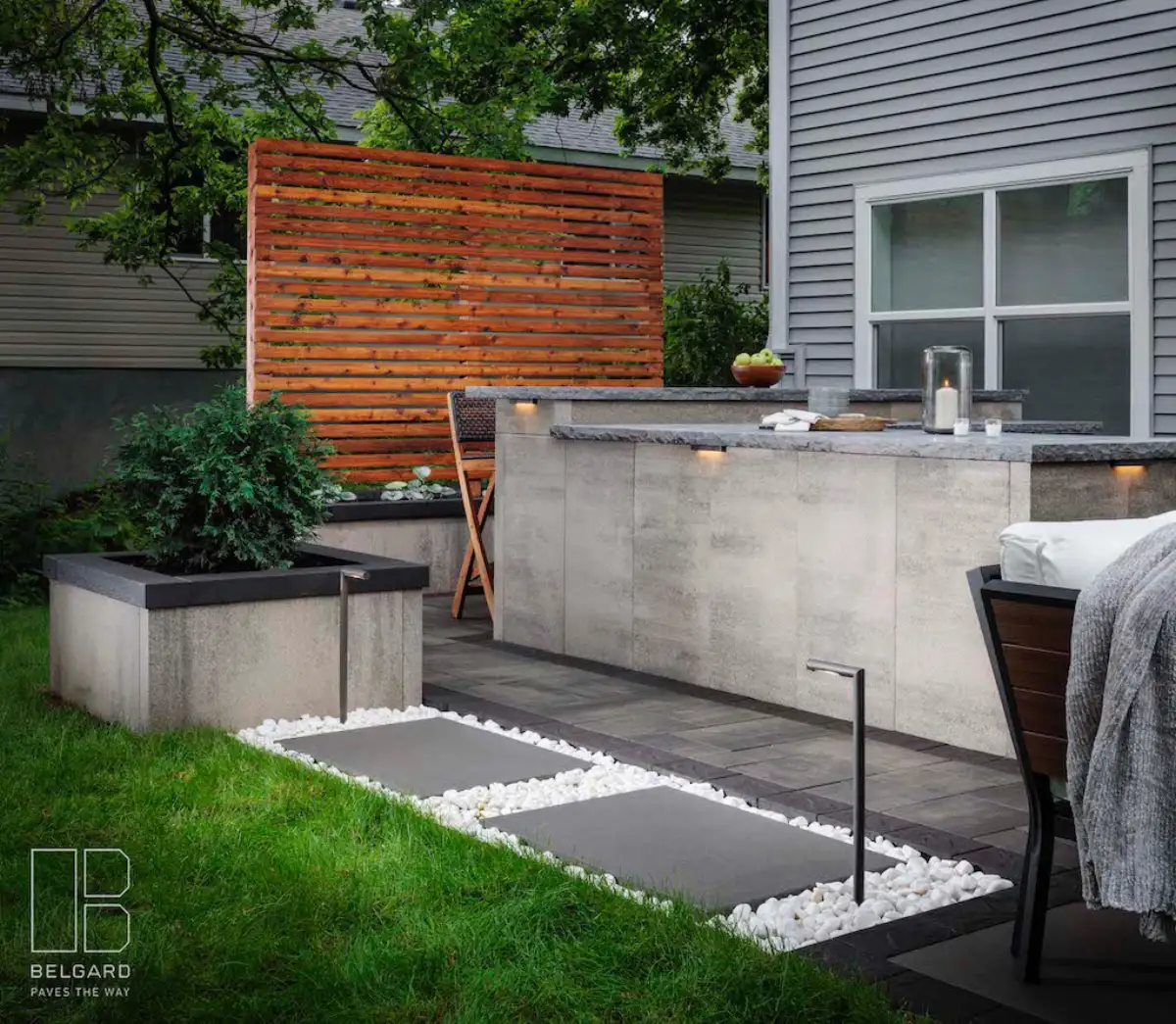
Imagine two plans for a dining patio. One keeps the existing steps and fits into a usable lawn area. The other removes old paving, changes the level at the door and needs a wall to create the same usable footprint. Even with the same paver choice, the second plan contains more work. The difference comes from the work needed to make the patio usable, even before you add optional features.
That is why multiplying your entire yard’s square footage by a paving rate is a poor way to price a renovation. Measure the areas actually changing, then identify their supporting work. For a focused surface project, our Minnesota patio cost guide explains that narrower decision.
Local review also belongs in early planning. If your home is in Excelsior, use the city’s Building Permits & Inspections guidance to find the right review contact. Confirm required approvals and any limits on footprint or placement for your address before committing to the layout. Our Excelsior service-area page connects you with relevant outdoor project options.
Reduce the wish list before cutting necessary construction
If the first proposal exceeds your budget, compare changes that preserve the way you want to use the yard. A smaller dining area with a comfortable route from the kitchen may serve you better than a large patio that leaves no budget for its connections.
- Keep what can work. Have existing paving, steps, structures and planting evaluated for the proposed layout before assuming everything needs replacement.
- Simplify the layout. Compare a more compact footprint and fewer changes in level. Price actual material alternatives with their installation requirements.
- Separate optional features. Ask for the cost of a pergola, additional gathering area or other upgrade apart from the core renovation.
- Compare one complete phase with the full plan. Make the first stage useful on its own and identify any preparation needed for later additions. Read our guide to phasing an outdoor living project for the sequencing decisions.
Include upkeep in the comparison, too. University of Minnesota Extension recommends matching plants to your soil, sun and available growing space to help avoid replacement costs. Its landscape design guidance treats maintenance and cost as part of the design. Discuss the care required by your selected plants, paving, decking and finishes before choosing them.
Bring a spending limit and a first priority to the consultation
Share the total you are comfortable investing, what that amount must cover and the single improvement you most want to enjoy. Bring photos of the yard and access route, any available plans and a short list of features you want to retain. Ask which choices can be priced now and which need more investigation.
Once a proposal is available, compare its included work and options with that total. Our estimate-reading guide covers allowances, exclusions and written clarifications in more detail.
Backyard renovation cost FAQs
Is $10,000 enough for a backyard renovation?
It can be a starting point for a limited refresh, particularly when usable surfaces stay. It should not be assumed to cover a new patio, walls, drainage, lighting and planting together. Have the existing yard assessed and price one clearly defined scope before deciding what fits.
How much does a backyard designer cost?
The fee depends on the design scope and deliverables. A concept layout, detailed construction documents and coordination of several outdoor features are different services. Landscape Charlie offers complimentary on-site consultations; confirm any separate design fees and included deliverables before authorizing design work.
What is the least expensive way to improve a backyard?
Begin with the parts that work: keep suitable existing features, focus on one everyday use and compare a simpler layout with the larger wish list. A focused planting or furnishing refresh may suit your goal when construction is unnecessary. Have drainage or structural concerns assessed before choosing a cosmetic update.
Does phasing a backyard renovation make it cheaper?
Phasing spreads spending across stages, but it does not automatically reduce the total. Repeated mobilization, temporary finishes or removing completed work can add expense. Compare a smaller complete project with a coordinated phased plan, including what each stage needs to leave ready for later work.