
Call Us: (612) 220-0101
Start the Process
(612) 220-0101
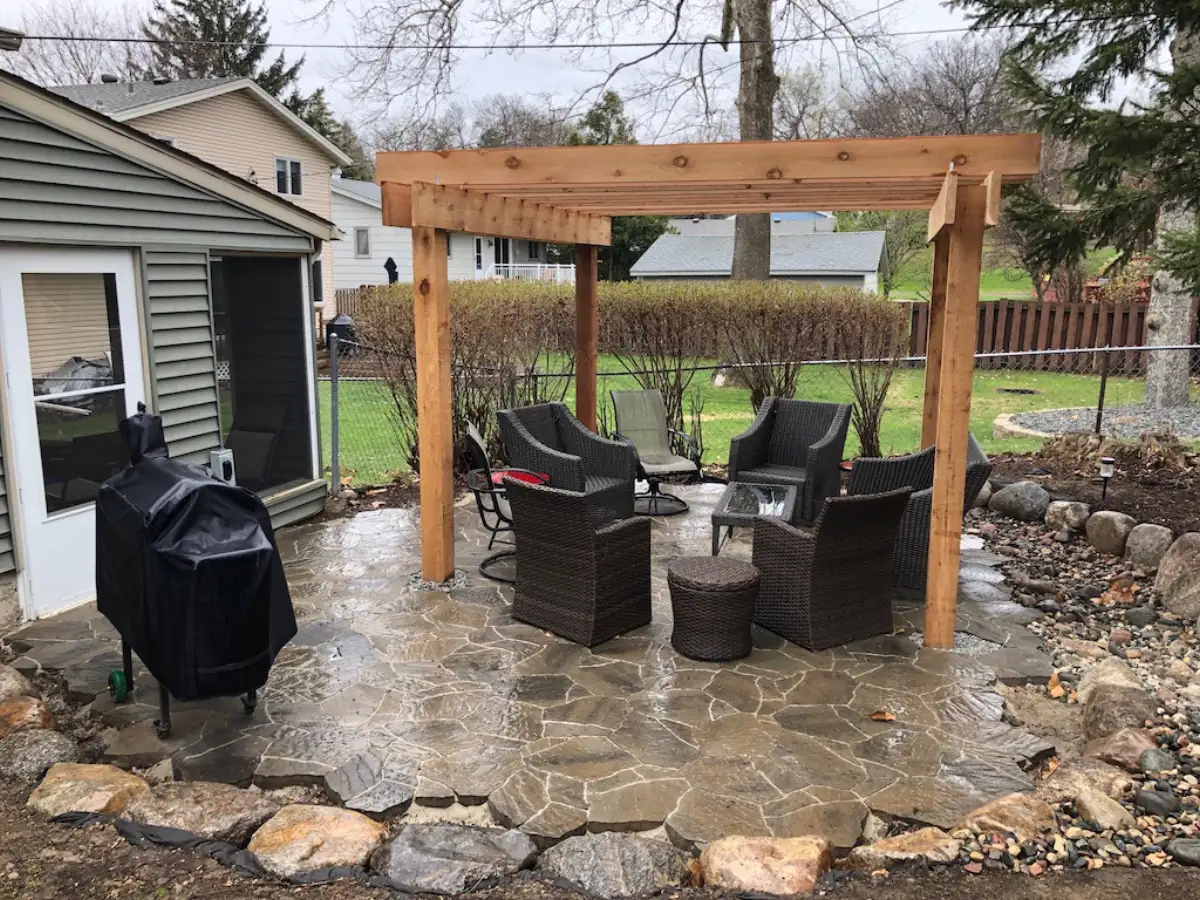
Wood pergola shading a backyard seating area

How Much Does a Pergola Cost in the Twin Cities?

Use a realistic installed range, then look at the material, structure, site, and features that determine where your project lands.

A Useful Starting Range for a Custom Pergola

By Charlie Kraemer | | 7 min read

Landscape Charlie’s published planning range for a professionally installed custom pergola in the Lake Minnetonka area is $8,000 to $35,000. A standard 12-by-14-foot cedar pergola commonly falls between $10,000 and $18,000 installed. Larger structures with electrical work for lighting, fans, or heaters commonly fall between $20,000 and $35,000.

Those figures are a starting point, not a quote. A pergola’s visible size tells only part of the story. Footings, structural spans, municipal requirements, material, access, and connections to the patio or deck can move two similarly sized structures to very different totals. The goal of this guide is to help homeowners in Excelsior, Minnetonka, and nearby western Twin Cities communities understand what they are comparing.

Why Online Pergola Prices Vary So Much

An online price may describe a boxed kit, materials only, a basic assembled structure, or a complete custom installation. Those are not equivalent purchases. Before using any number as a comparison, check whether it includes delivery, demolition, excavation, footings, structural design, permit coordination, finish work, electrical work, cleanup, and restoration.

A low kit price can still be useful if a simple kit fits the property and the owner understands the remaining work. It is less useful when compared directly with a proposal for a custom structure integrated with an existing patio, deck, lighting plan, or wider outdoor living project.

The Six Choices That Most Affect Pergola Cost

1. Size, height, and structural spans

More square footage increases material and labor, but the relationship is not perfectly linear. Longer beam spans, greater height, wider overhangs, and fewer desired posts can require different structural solutions. That is why a 20-by-20-foot pergola cannot be priced accurately by multiplying a smaller pergola’s square-foot cost.

2. Material and finish

Cedar, composite or vinyl systems, and other manufactured pergola products have different purchase prices, finish requirements, and maintenance profiles. A lower initial price may come with more future finishing work, while a higher-cost material may reduce routine upkeep. Compare both the installed price and what ownership will require over time.

3. Open rafters, shade components, or a roof system

A traditional open-rafter pergola defines an outdoor room and provides partial shade. Closely spaced rafters, retractable shade, fixed panels, drainage components, or operable roof systems add material, hardware, design coordination, and labor. They can also change how wind, rain, and snow need to be considered.

4. Footings and site conditions

A structure needs a footing design appropriate to the project and site. Existing pavement, grade changes, drainage paths, tight equipment access, buried utilities, and restoration needs can all affect the work below and around the finished pergola. If a new patio is part of the plan, the two should be designed together so elevations, post locations, and water movement are resolved before construction.

5. Freestanding or connected to the home

A freestanding pergola and a structure connected to a house create different design and construction questions. Connections, clearances, roof edges, doors, windows, and existing finishes can affect the detailing and approvals. The proposal should state clearly what type of structure is being priced.

6. Lighting, fans, heaters, and other features

Electrical service, fixtures, controls, fans, and heaters add more than the price of the device. Routing, mounting, switching, trade coordination, and weather-appropriate components all belong in the scope. Planning them before the pergola and patio are finished is usually cleaner than adding visible wiring later.

What Should Be Included in a Pergola Estimate?

Compare written scope before comparing totals. A useful proposal should make the following items easy to identify:

  • overall dimensions, height, post locations, and whether the structure is freestanding or attached;
  • material, finish, hardware, and any shade or roof components;
  • footing, structural, and site-preparation work;
  • permit or review responsibilities, when applicable;
  • electrical features and which trade is responsible for them;
  • demolition, access protection, cleanup, and landscape or hardscape restoration;
  • allowances, exclusions, change-order terms, and care information for the selected material.

For a pergola that is one part of a larger backyard plan, review the broader landscape project investment guide as well. It explains why access, grading, drainage, materials, and connected features influence the complete project budget.

Permits and Local Review Can Affect the Schedule

Pergola permit and zoning requirements vary across the Twin Cities by municipality, structure size, height, attachment, and property conditions. Setbacks, easements, utilities, and neighborhood or association rules may also affect the final location. Confirm the current requirements with the city that governs the property before construction begins, and make sure the proposal assigns responsibility for applications and approvals.

Landscape Charlie serves communities around Lake Minnetonka and the western Twin Cities. Review the full service area list, then explore the company’s custom pergola installation service for material and construction details.

Get a Pergola Price for Your Property

A useful estimate starts with the intended size, how you want to use the space, preferred material, and any lighting, shade, patio, or deck connections. Landscape Charlie can review the site and develop a scope for the property.

Request a Consultation

FAQ: Pergola Costs in the Twin Cities

What is the average cost of a pergola installed in the Twin Cities?

Landscape Charlie’s published planning range for custom pergola installation in the Lake Minnetonka area is $8,000 to $35,000. A standard 12-by-14-foot cedar pergola commonly falls between $10,000 and $18,000 installed. The final price depends on size, material, structure, site conditions, and added features.

Is it cheaper to buy a pergola kit or build a custom pergola?

A kit usually has a lower product price, but that number may not include delivery, assembly, footings, site preparation, permits, electrical work, or changes needed for local structural requirements. Compare the complete installed scope rather than the kit price alone.

How much does a 20-by-20-foot pergola cost?

A 20-by-20-foot pergola is 400 square feet, and its price cannot be estimated reliably from area alone. Longer spans, post and beam sizing, the number and design of footings, material, roof or shade components, access, electrical features, and municipal review can all change the cost. A site-specific design and proposal are needed.

Do I need a permit for a pergola in Minnesota?

Permit and zoning requirements vary by municipality, structure size, height, attachment, and property conditions. Confirm the current rules with the city that governs the property before construction and make sure the proposal states who is responsible for applications and approvals.

Ready to price a pergola for your yard? Use the Landscape Charlie contact page or call (612) 220-0101.

Charlie Kraemer
Charlie Kraemer
Owner of Landscape Charlie, Belgard Advisory Council member, and landscape design professional with 30+ years of experience serving the Lake Minnetonka area.