
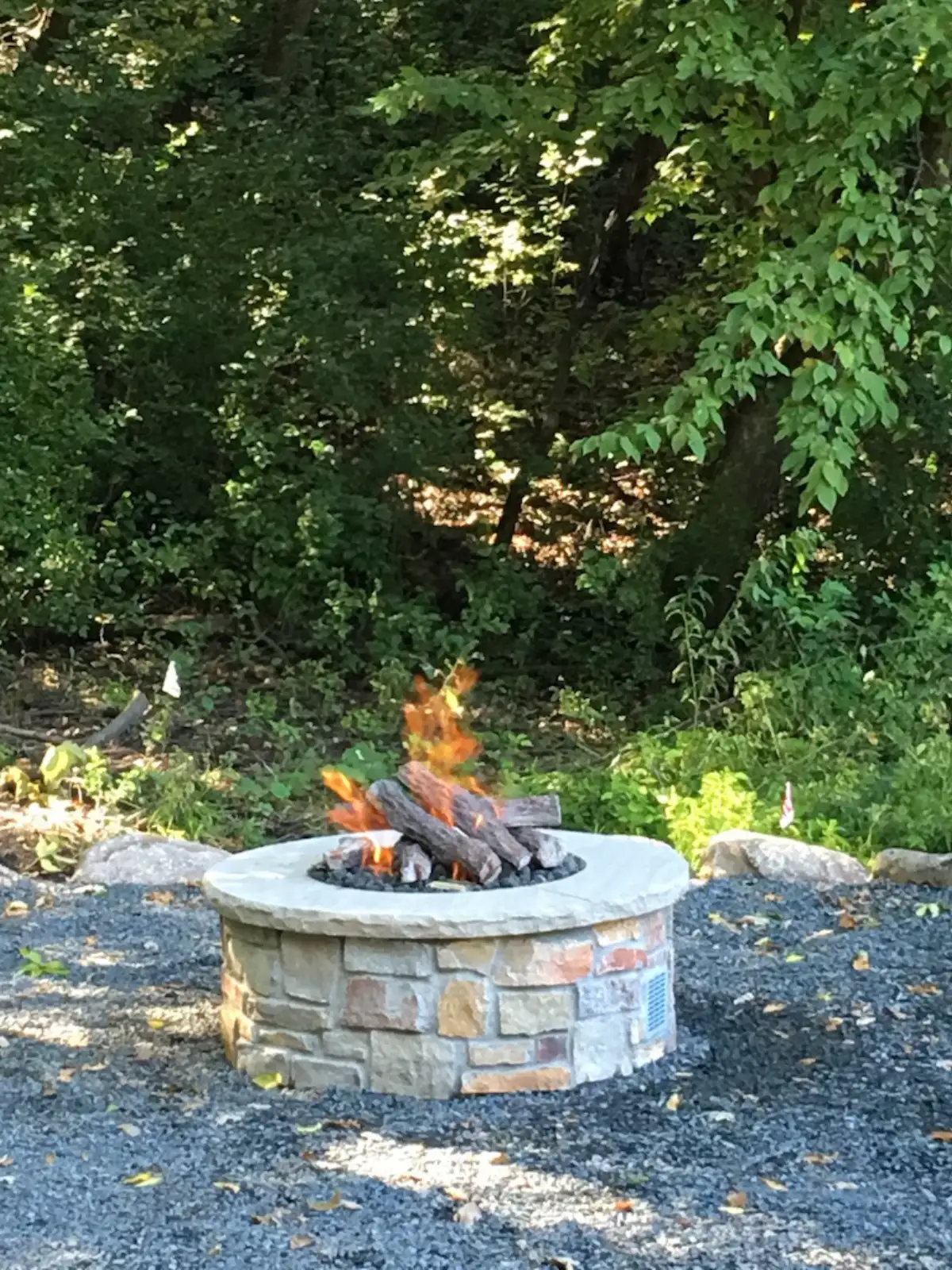
Fire Pit Planning Guide for Minnesota Backyards (2026)
By Charlie Kraemer | May 5, 2026 | 8 min read
A well-designed fire pit turns a patio into a three-season gathering space. In the Lake Minnetonka area, where evening temperatures drop into the low 50s by late September and pleasant outdoor evenings return by mid-May, a fire feature can add two to three months of usable outdoor time to your year. This guide covers everything you need to decide before breaking ground: fuel type, materials, seating layout, local code requirements, and realistic costs for Minnesota homeowners.
Gas vs. Wood-Burning: Which Is Right for Your Backyard?
This is the first decision, and it affects every other aspect of your fire pit project. Both fuel types work well in Minnesota, but they serve different lifestyles.
Gas Fire Pits
Gas fire pits run on natural gas (if your home has a gas line nearby) or propane (a buried or concealed tank). They ignite with a switch or remote, produce a consistent flame, and shut off instantly. There is no smoke, no ash cleanup, and no need to store firewood.
Gas is the better choice if you plan to use your fire pit frequently on weeknight evenings, if your patio sits close to your house or neighbors, or if anyone in your household is sensitive to wood smoke. Most of the fire pits we install in Minnetonka, Wayzata, Deephaven, and Woodland are gas because homeowners in these communities want convenience and clean operation. A licensed plumber runs the gas line during construction, typically routed under the patio base before pavers are laid.
The main trade-off is ambiance. A gas flame is attractive, but it does not crackle, pop, or produce the campfire scent that many people associate with sitting around a fire. Modern gas burner designs have narrowed this gap significantly. Linear burner trays with fire glass or lava rock produce a dramatic, contemporary flame pattern that works particularly well in the premium outdoor living spaces common around Lake Minnetonka.
Wood-Burning Fire Pits
Wood-burning fire pits deliver the full sensory experience: the sound of crackling logs, the smell of burning oak or birch, and the dancing flame pattern that only real wood produces. They are also less expensive to install because there is no gas line to run.
The trade-offs are practical. You need a place to store seasoned firewood. You need to manage ash after every use. Smoke direction changes with the wind, which can be an issue on smaller lots or when the fire pit is close to your dining area. And you cannot turn a wood fire on and off with a switch; it takes 15 to 20 minutes to build a proper fire and another hour to burn down safely.
Wood-burning pits tend to work best for homeowners with larger properties, particularly in communities like Orono, Medina, and the larger-lot neighborhoods of Shorewood and Chanhassen where spacing from structures and neighbors is generous. If your property backs up to trees or a lake, a wood-burning fire pit with a clear view of the water or woods creates an experience that gas simply cannot replicate.
Materials That Last in Minnesota's Climate
Whatever you build needs to survive the same freeze-thaw punishment that affects every hardscape element in this climate. Our spring renovation checklist explains this in detail, but the short version is: 42 inches of frost depth, 60-plus freeze-thaw cycles per year, and relentless moisture from rain, snow, and lake-effect humidity.
Natural Stone
Fond du Lac stone, Kasota limestone, and other regionally quarried natural stone are proven performers in Minnesota fire pit construction. Natural stone fire pits age beautifully and complement the wooded, lakeside settings found throughout the western suburbs. The key is using stone with low absorption rates. Porous stone absorbs water, freezes internally, and spalls apart within a few winters. Your contractor should be able to specify absorption test data for any stone they propose.
Manufactured Block
Belgard and similar manufacturers produce fire pit kits and modular block systems specifically engineered for freeze-thaw climates. These products are denser than standard concrete block, with absorption rates typically below 5%. They come in a wide range of colors and textures that match popular paver styles. This is the most cost-effective option for a professional-grade fire pit that integrates visually with an existing or new paver patio installation.
Fire Pit Inserts and Liners
Regardless of the exterior material, every fire pit needs a steel or stainless-steel liner insert to protect the surrounding masonry from direct heat exposure. For gas fire pits, the insert houses the burner assembly, ignition system, and gas connections. For wood-burning pits, the liner contains the fire and prevents heat from transferring into the surrounding block or stone, which would cause it to crack over time. Skipping the liner is the single most common fire pit construction mistake, and it leads to cracking and structural failure within two to three seasons.
Designing the Space Around Your Fire Pit
The fire pit itself is only part of the project. How you design the surrounding space determines whether people actually use it. After building fire feature spaces across Minnetonka, Eden Prairie, Plymouth, and the Lake Minnetonka communities for over 15 years, here is what we have found works best.
Seating Layout
Plan for seating 6 to 8 people comfortably. The most popular seating options in our market are built-in seat walls, which double as retaining walls on sloped sites, and dedicated furniture pads with Adirondack chairs or outdoor sofas. Built-in seat walls cost more upfront but eliminate the need to buy, store, and maintain outdoor furniture.
Leave 36 to 48 inches between the fire pit edge and the front of any seating. Closer than 36 inches feels uncomfortably hot. Farther than 48 inches and people on the outer edge do not feel the warmth, especially on a cool October evening.
Traffic Flow
Your fire pit area needs at least two entry points so people are not stepping over each other to get in and out. If the fire pit sits at the far end of your patio, a well-lit walkway from the house is essential for safety after dark. In our experience, fire pits that require navigating steps or uneven terrain to reach get used half as often as ones connected directly to the main patio by a flat, lit path.
Wind and Smoke Considerations
In the Lake Minnetonka area, prevailing summer winds come from the south and southwest. Position your seating so the most-used seats are upwind of the fire pit in typical conditions. This is primarily a concern with wood-burning pits, but even gas fire pits generate enough heat to make downwind seats less comfortable on warm evenings.
If your property is exposed to lake winds, consider adding a low seat wall or privacy screening on the windward side. This creates a sheltered microclimate that makes the fire pit area comfortable on evenings when an open patio would feel too breezy.
Minnesota Fire Pit Codes and Setback Requirements
Every municipality in our service area has rules about open flames, and they vary. Here are the general guidelines for the communities where we work most frequently:
- Setback from structures. Most western suburb municipalities require a minimum of 10 feet between a fire pit and any combustible structure (your house, deck, pergola, fence, or shed). Some require 15 feet. Gas fire pits with manufacturer-rated clearance specifications can sometimes be placed closer, but this requires documentation.
- Setback from property lines. Typically 10 to 25 feet depending on the municipality. Minnetonka and Eden Prairie are generally 10 feet. Orono and Medina, with their rural zoning, tend to be more flexible.
- Permits. Standalone fire pits under a certain height (usually 30 to 36 inches) often do not require a building permit, but they may require a fire permit. Check with your city's fire marshal or building department before construction. If your fire pit is part of a larger outdoor living project that includes retaining walls over four feet or any attached structure, the entire project will need a permit regardless.
- Burning restrictions. Hennepin County burn restrictions apply to all of our primary service areas. Open burning of yard waste is generally prohibited. Recreational wood fires in a contained fire pit with a spark screen are typically allowed, but cities may issue temporary burn bans during dry conditions.
We handle permitting as part of every project. Our familiarity with the building departments in Shorewood, Minnetonka, Wayzata, Eden Prairie, Plymouth, Chanhassen, and the surrounding communities means we know what each one requires and can keep the process moving without delays.
What Does a Fire Pit Cost in Minnesota?
Fire pit costs in the Twin Cities western suburbs vary based on size, materials, fuel type, and how much surrounding work is included. Here is what to expect:
- Basic fire pit on an existing patio: $3,000 to $6,000. Manufactured block, gas or wood-burning, standard size (36 to 42-inch interior diameter). This assumes a gas line is accessible and no additional patio work is needed.
- Fire pit with seat wall and dedicated pad: $8,000 to $18,000. Custom-sized fire pit, 8 to 12 feet of built-in seat wall, a dedicated paver pad if no existing patio, gas line installation, and low-voltage lighting on the seat wall.
- Premium fire feature as part of a full outdoor living space: $15,000 to $35,000+ for the fire feature zone. Natural stone construction, linear gas fire table or oversized round fire pit, extensive built-in seating, integrated lighting, and sometimes a matching fireplace structure. These projects are typically one component of a larger outdoor living design-build project in the $50,000 to $150,000+ range.
Gas line installation by a licensed plumber typically adds $1,500 to $3,000 depending on the distance from your home's existing gas meter. If you are planning a gas fire pit and also considering a future outdoor kitchen, running a larger gas line now saves significant cost compared to adding a second line later. Our Project Investment Guide breaks down costs across all project types.
When to Start Planning Your Fire Pit Project
If you want to enjoy a new fire pit this summer, the window to begin the design conversation is right now. May is the sweet spot for fire pit projects in Minnesota. The ground is thawed and workable, material suppliers are fully stocked, and construction crews have not yet hit peak-season backlogs. A standalone fire pit project can go from design approval to completion in two to three weeks. A fire pit integrated into a larger patio or outdoor living project follows the timelines outlined in our spring renovation checklist.
For a complimentary on-site consultation where we walk your property, discuss placement options, and provide a preliminary scope and estimate, contact Landscape Charlie or call (612) 220-0101. We serve Shorewood, Minnetonka, Wayzata, Eden Prairie, Plymouth, Excelsior, Deephaven, Orono, and the surrounding Lake Minnetonka communities.